How to Pass CompTIA Security+ Without Drowning in Acronyms
Open any Security+ study guide and the first thing that hits you is the acronym soup. SIEM, EDR, MFA, WAF, NAC, PAM, SAML, CVSS, RPO, CISO, GDPR, SDLC, BEC, DLP, OSINT. The current SY0-701 syllabus has over two hundred and fifty distinct technical terms, and most of them are three to five letters long. Faced with that wall of capital letters, the typical candidate reaches for the obvious tool: flashcards. Buy a 600-card deck, drill it for six weeks, and walk into the exam praying the acronyms align with the questions.
The candidates who actually pass on the first attempt don't do that. They do something that sounds less impressive and works far better. They group the terms into roughly eight mental categories, learn what each category is for, and then place every new acronym they encounter inside one of them. When the exam asks about an unfamiliar three-letter blob, they recognise the category first, narrow the answer choices from four to two, and pick the right one even without having memorised the specific term. This guide walks the eight categories that absorb almost the entire SY0-701 syllabus, with the acronyms that live inside each.
Quick context
The current Security+ exam is SY0-701: ninety questions across five domains in ninety minutes, with a scaled pass mark of 750 out of 900 (about 83 percent raw). A handful of those questions are performance-based — interactive scenarios where you drag-and-drop configuration items, click hotspots, or order steps — and the rest are multiple choice. There are no formal prerequisites, but CompTIA recommends two years of IT administration experience and the Network+ as a comfortable foundation. The cost sits around three hundred and seventy US dollars. None of that is the hard part of this exam. The acronyms are.

The eight categories that absorb the syllabus
Every term you'll see on the exam fits into one of these. Learn the categories first, then the specific terms become anchored instead of free-floating.
1. Identity and access
Everything to do with who someone is and what they're allowed to do. The terms that live here are MFA (multi-factor authentication), SSO (single sign-on), SAML and OAuth (federation protocols), RADIUS and TACACS+ (network access protocols), PAM (privileged access management), MDM (mobile device management), and the access-control models — discretionary, mandatory, role-based, attribute-based. When a scenario asks how a user proves they are who they claim to be, or how an organisation enforces what an authenticated user can reach, you are in this category. The exam loves to test the distinction between authentication (who) and authorization (what), and the contrast between the four access-control models.
2. Network controls
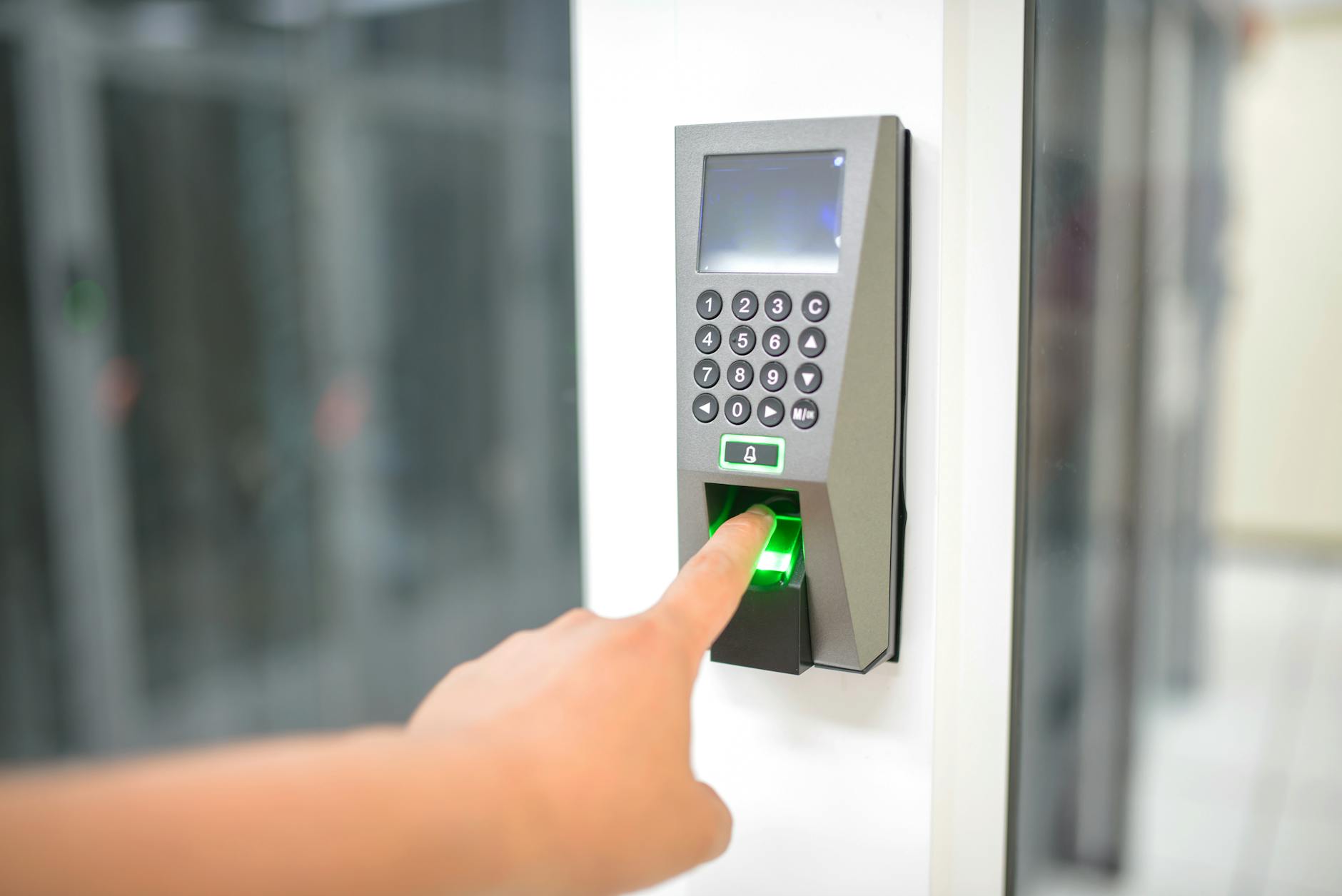
Anything that filters, segments, or monitors traffic between systems. Firewalls (stateful, stateless, next-generation), IDS and IPS (intrusion detection and prevention), WAF (web application firewall), NAC (network access control), VPN (virtual private network), and the architecture concepts of segmentation, micro-segmentation, and zero trust. Also the specific protocols you're expected to recognise — TLS, SSH, HTTP versus HTTPS, DNS, and the difference between in-band and out-of-band management. Questions in this category give you a scenario describing unwanted traffic, lateral movement, or an exposed service, and ask which control would have stopped it.
3. Cryptography and PKI
Anything that scrambles data or proves its integrity. Symmetric versus asymmetric ciphers, hashing functions (SHA family, MD5, HMAC), the public-key infrastructure stack (CA, CRL, OCSP, intermediate certificates), digital signatures, FDE (full-disk encryption), and certificate-related attacks (downgrade, key compromise, expired certificate). The exam will rarely ask you to perform a calculation, but it will routinely ask you to identify which mechanism provides confidentiality, integrity, authenticity, or non-repudiation — the four properties cryptography services. Memorise that mapping cold.
4. Threats and attacks
The other side of the table — what's coming at you. Malware families (ransomware, worms, trojans, rootkits, fileless), social engineering (phishing, vishing, smishing, BEC, pretexting, watering-hole), application attacks (SQL injection, XSS, CSRF, buffer overflow), network attacks (ARP poisoning, DNS poisoning, on-path, replay), and supply-chain compromise. The exam will give you a one-paragraph attack scenario and ask which technique was used; the answer hinges on a specific detail in the scenario — "the attacker manipulated the URL" points at injection, "the attacker called the help desk pretending to be the CEO" points at pretexting.
5. Monitoring and incident response
The operational side: detecting that something happened and responding to it. SIEM (security information and event management) aggregates logs and triggers alerts. SOAR (security orchestration, automation, and response) takes those alerts and runs playbooks. EDR (endpoint detection and response) lives on endpoints. The IR lifecycle — preparation, identification, containment, eradication, recovery, lessons learned — appears on almost every exam. OSINT, threat intelligence feeds, and the difference between IOCs (indicators of compromise) and TTPs (tactics, techniques, and procedures) round out this category.
6. Vulnerability management
How you know what's broken and what to do about it. CVE (the public vulnerability database), CVSS (the scoring system, 0 to 10), authenticated versus unauthenticated scans, false positives, and the patch lifecycle. Penetration testing and its colour-coded variants — black, white, grey box — sit here too. The exam will ask which scoring metric communicates severity (CVSS), which database catalogues known vulnerabilities (CVE), and which type of scan finds the most thorough results (authenticated, because it can read configuration that an unauthenticated scan cannot).
7. Risk and governance
The paperwork that wraps around the technical controls. Risk treatment options — avoid, transfer, mitigate, accept — and the formulas for quantitative risk (ALE = SLE × ARO). Compliance frameworks — NIST CSF, ISO 27001, PCI DSS, SOC 2, HIPAA, GDPR — and the difference between a regulation, a framework, and a standard. Control types (preventive, detective, corrective, compensating) and control categories (technical, administrative, physical). Policies, standards, procedures, guidelines, AUP, NDA, SLA. This is the category that drowns the most candidates because it's the least intuitive; commit the risk-treatment-options list and the four control-type definitions to memory and you'll handle most questions here.
8. Resilience and data protection
What happens when prevention fails. Backups (full, incremental, differential, snapshot), the 3-2-1 rule, business continuity versus disaster recovery, RPO and RTO (the two metrics that define recovery commitment), hot site versus warm site versus cold site, geographic redundancy, and the related data-protection terms — DLP (data loss prevention), data classification, data sovereignty, anonymisation, pseudonymisation. The exam loves the RPO-versus-RTO distinction; RPO is data loss measured in time, RTO is outage duration measured in time.

The pattern that wins marks
Once the categories are mental furniture, the exam-day pattern is mechanical. Read each question and identify the category before looking at the answer choices. "A user clicked a link in an email purportedly from the CFO" — category four, threats and attacks, specifically social engineering. "The team needs to confirm a downloaded file matches what the vendor published" — category three, cryptography, specifically integrity via hashing. "Two answers both look right" — almost always one belongs to a different category than the question's, and that's the one to eliminate first.
The acronym you've never seen still gets placed this way. If a question mentions a tool called UEBA and you don't recognise it, look at the surrounding context — "detects anomalous user behaviour by analysing log streams" — that's monitoring and incident response (category five). UEBA is user-and-entity behaviour analytics; whether you knew the acronym or not, the category lets you reason that it pairs with SIEM and EDR, which lets you pick the right answer to whatever the question was actually asking.
What about performance-based questions?
The performance-based questions (PBQs) at the start of the exam often scare candidates more than they deserve. They are typically configuration drag-and-drops: "build the firewall rule that allows web traffic from the DMZ to the internal database while blocking everything else," or "order the steps of the incident-response lifecycle," or "map each control to the correct control type." Almost every PBQ is just two or three categories applied together — network controls plus threats, identity plus risk, monitoring plus IR lifecycle. The category framework above handles them the same way as the multiple-choice questions; if you can identify which two categories the PBQ is testing, the answer is usually a matter of carefully reading the supplied options.
The single most useful PBQ tactic is to attempt them last, not first. CompTIA exam software lets you flag and return, and the multiple-choice questions are faster marks. Lock in everything you're confident on, then come back to the PBQs with the remaining time and a calmer head.
What to do this week
Reading this guide is the orientation; the marks come from putting the framework into practice. Open the CompTIA Security+ question bank on IT Exam Certs, run thirty questions cold, and note which category each one belonged to as you went. The categories you couldn't identify in five seconds are the ones to drill first. The single biggest reason candidates fail Security+ on the first attempt is that they studied the terms in alphabetical order instead of by purpose. Group them by what they do, and the exam stops being a memory test and starts being something you can actually reason your way through.
Photos from Pexels: cover by Ann H, sticky notes by DS stories, fingerprint scanner by panumas nikhomkhai, dashboard by Lukas Blazek.